I spent years assuming there was only one thing to do with an idol: kill it, get rid of it, make it disappear. And that's true for some of it. But it took me a long time to realize that not everything tangled up in a struggle with idolatry needs to be destroyed.
Some of it needs to be redirected. Some of it needs to be handed over to God for a completely different use. Getting those three categories confused is one of the reasons people stay stuck longer than they need to.
Quick answer: Scripture gives three different endings for things connected to idolatry, not one. Some things get destroyed completely, with no attempt to reuse them (the golden calf in Exodus 32). Some things get repurposed as fuel for genuine worship (Gideon's Asherah pole in Judges 6). And some things, which were never evil to begin with, simply get rededicated to God's service (the pagan spoils that ended up in the temple treasury, Joshua 6 and 1 Chronicles 18). Knowing which category applies to a given struggle is a genuinely useful diagnostic question.
The Three Ways Scripture Deals With Idols
1. Destroy: Some things simply get destroyed
When Israel built the golden calf at the foot of Mount Sinai, Moses didn't look for a redemptive use for it. Exodus 32:20 records that he burned it, ground it to powder, scattered it on water, and made Israel drink it. No repurposing. No second life. Total repudiation.
Some things in a struggle belong in this category. The subscription. The specific app. The device you only ever use at a particular hour for one thing. The specific relationship that only ever fed the wrong pattern. These don't get a redemptive second act. They get removed, completely, the way Moses dealt with the calf.
2. Direct: Some things become fuel for real worship
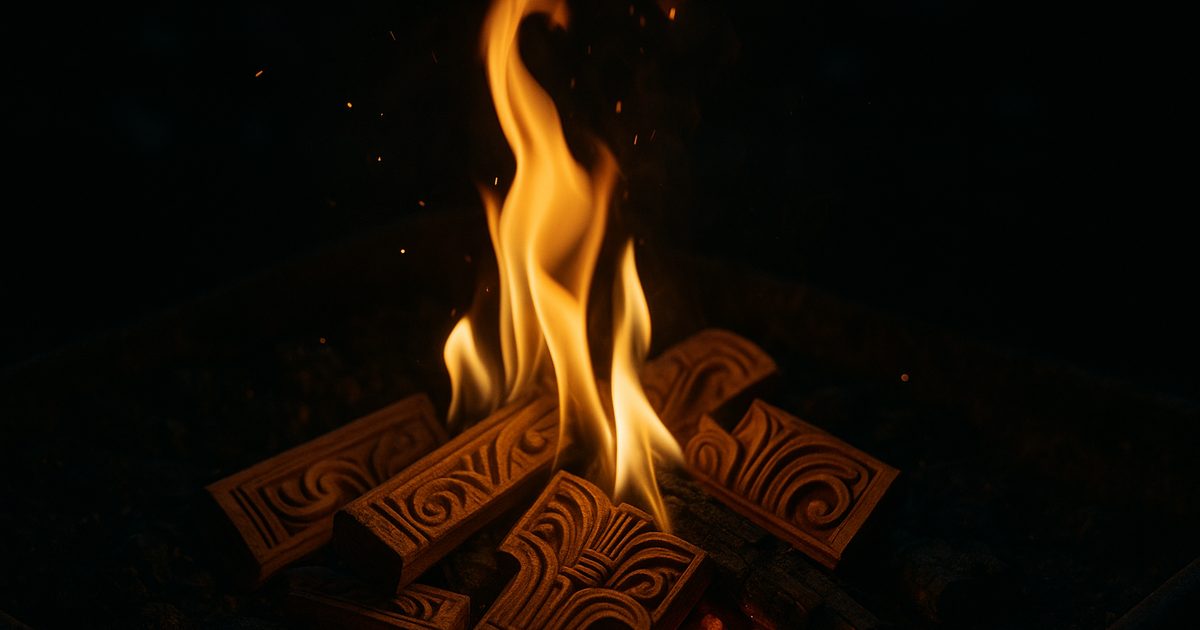
Judges 6 tells a different story. God instructs Gideon to tear down his father's altar to Baal and cut down the Asherah pole beside it, a wooden object built specifically for pagan worship. But instead of telling Gideon to haul the wood away and dispose of it separately, God tells him to build an altar to the Lord and use the wood of the very Asherah he cut down as fuel for the sacrifice (Judges 6:25-26). The object that had been receiving false worship became the fire underneath true worship.
This is the category most people miss entirely. The intensity, the drive, the appetite that an idol hijacked, that doesn't need to be diminished. It needs to be redirected. God didn't give you a weak drive that got corrupted into a strong one; he gave you a strong drive, and sin stole it. That same intensity, aimed differently, is what pursuing God with your whole heart looks like.
Redirecting a strong drive isn't work you do alone.
The community exists for exactly this: men helping men aim the same intensity somewhere true.
3. Dedicate: Some things get placed into God's service
A third pattern shows up after the fall of Jericho. The silver, gold, bronze, and iron weren't destroyed. Joshua 6:19 and 24 record that they were placed into the treasury of the house of the Lord. Later, some of the bronze David took from defeated pagan nations was dedicated to the Lord, and Solomon eventually used it to build the bronze sea, the pillars, and the vessels of the temple (1 Chronicles 18:8). Material that once belonged to pagan kingdoms ended up furnishing the worship of Yahweh.
This is the category for things that were never actually evil, they were just misused. A gift, a skill, a story, a body. None of those need to be destroyed or even redirected in intensity; they need to be rededicated to a new purpose.
A Memorable Way to Hold This: The Three D's
If you want a phrase that sticks, try this one:
- Destroy what can't be redeemed.
- Direct what needs redirecting, not eliminating.
- Dedicate what was never evil, just misused.
Or picture it: ash, fuel, treasure. The golden calf became ash. The Asherah became fuel. Jericho's silver and gold became temple treasure. Same category, three different physical endings, three different biblical stories.
Why This Distinction Matters
People who only know the "destroy everything" category tend to burn out or feel like something is wrong with them when a strong desire doesn't go away after they get rid of the idol itself. It's not supposed to go away. It's supposed to change targets. Trying to extinguish a God-given drive instead of redirecting it is a recipe for either despair or eventual relapse.
On the other hand, people who only know the "redirect and redeem everything" category sometimes keep things around that genuinely need to be destroyed, telling themselves they're "working on using it differently" when what's actually needed is complete removal: the golden-calf treatment, not the Asherah treatment.
A Simple Way to Sort It Out
Take the specific things connected to your struggle and put each one into one of three columns:
- Destroy completely. No reuse, no redirection, no second life.
- Redirect as fuel. The intensity and drive itself, aimed at pursuing God instead of an idol.
- Rededicate to service. The parts of you that weren't evil, just misused, now handed over to God's purposes.
Yesterday it competed with God for your worship. Today it can become part of how you worship him.
A Few Common Questions
Does the Bible say to get rid of everything connected to a sin struggle?
Not always. Scripture shows three different patterns for dealing with things connected to idolatry: complete destruction (Exodus 32), redirection into fuel for true worship (Judges 6), and rededication to God's service (Joshua 6, 1 Chronicles 18). Discernment is needed to know which applies to a given situation.
What does Gideon's Asherah pole in Judges 6 mean?
God told Gideon to cut down his father's Asherah pole, an object built for pagan worship, and use its wood as fuel for a sacrifice to the true God. The object that had received false worship became the fire underneath true worship, showing that some things connected to idolatry don't need to be destroyed, just redirected.
Why doesn't my sexual desire go away even after I quit pornography?
Because it isn't supposed to. A strong sexual drive isn't the sin; misdirecting it is. Recovery isn't about eliminating desire, it's about redirecting the same intensity toward God and your marriage instead of an idol.
This is Part 2 of a three-part series finishing out Level 4 of the Victory Over Pornography curriculum. ← Back to Part 1 | Continue to Part 3: The Idol With No Statue →